Before I saw them, I smelled them.
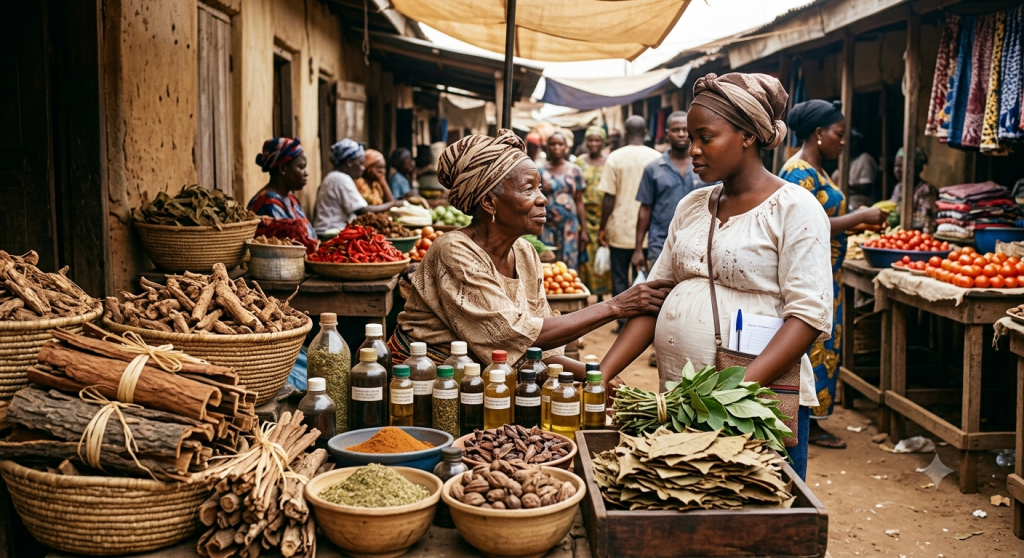
The sharp scent of dried roots.
Fresh leaves stacked in woven baskets.
Tree bark tied into neat bundles.
Seeds, spices, powders, shells, and bottles arranged with remarkable precision.
Hidden among traders selling tomatoes, peppers, and yam sat another kind of marketplace.
This was where the Lekuleja worked.
To many visitors, they looked like ordinary market women.
To the communities they served, they were something else entirely.
“Tell me what is wrong,” one woman asked a customer.
She didn’t immediately reach for a bundle of herbs.
She asked questions.
How many months pregnant?
Has she been eating?
Is she sleeping well?
Has she been to the clinic?
Only after listening carefully did she begin selecting leaves, roots, and bark.
Watching this exchange, I realized the Lekuleja were doing far more than selling medicinal plants.
They were translating generations of knowledge into everyday care.
Many of the women I interviewed explained that younger generations no longer recognized the plants their grandmothers once gathered themselves. Instead of searching forests or family gardens, they now came to the market.
The knowledge had not disappeared.
It had changed address.
Today, the Lekuleja have become custodians of knowledge that once lived inside households. They know which leaf is prepared as tea, which bark must be boiled, which root should never be mixed with another, and why dosage matters.
In many ways, they function much like community pharmacists, not because they wear white coats, of course they dont. But because they preserve, interpret, and pass on therapeutic knowledge that might otherwise disappear.
As I left the market, I looked back once more.
What many people saw was a collection of herbs.
What I saw was a living library.
A Question to Carry Home
If knowledge can disappear when those who carry it are gone, who are the libraries we walk past every day without noticing?
 bridgingbirth